
R&D Program
Projects are initiated by industry and government partners, always with a clear plan for how the outcomes will be used. The following research areas have been developed over two years after intensive consultation with industry, government and research partners.
R&D PROGRAM 1: FREIGHT PRODUCTIVITY
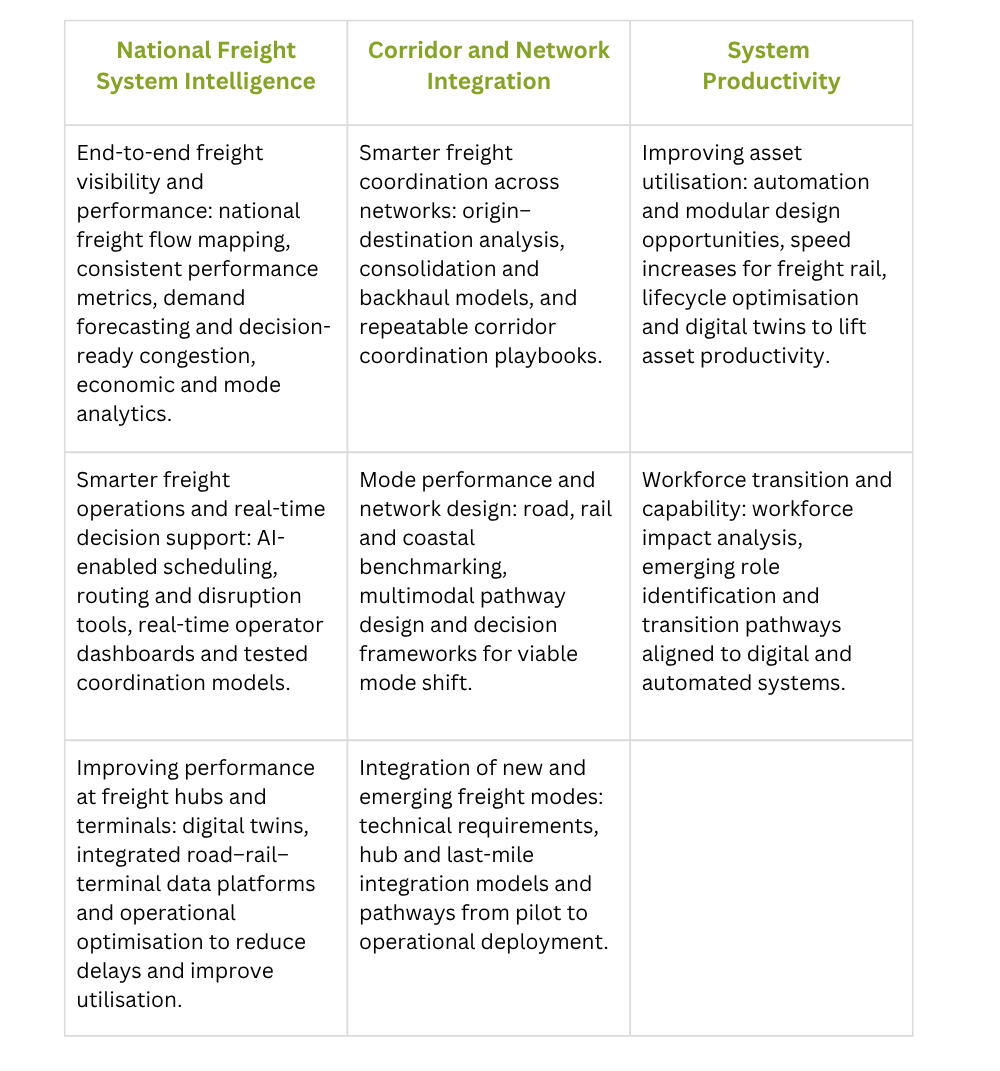
Lifting performance across Australia’s freight supply chains. This program focuses on improving end-to-end freight system productivity by enabling the system to efficiently and reliably cater for future freight growth, while optimising asset utilisation.
Themes and activities:
Outputs
- National map of critical freight corridors and economic risk exposure
- Climate, disruption and cyber risk assessments with recovery frameworks
- Network resilience and alternative routing models with prioritised interventions
- Freight corridor and precinct safeguarding (land-use protection) frameworks
- Clear, harmonised regulatory and assurance pathways for new freight systems
- Risk allocation, governance and liability models for scalable deployment
- Collaboration, social licence and workforce readiness frameworks
Outcomes
- More resilient freight corridors, hubs and gateways under climate and system stress
- Reduced disruption impacts and faster recovery from major events
- Protected freight corridors from long-term land-use encroachment
- Safer, more certain deployment of new freight technologies
- Stronger industry, workforce and community confidence
- Improved national supply chain reliability and economic security
R&D PROGRAM 2: FREIGHT DECARBONISATION
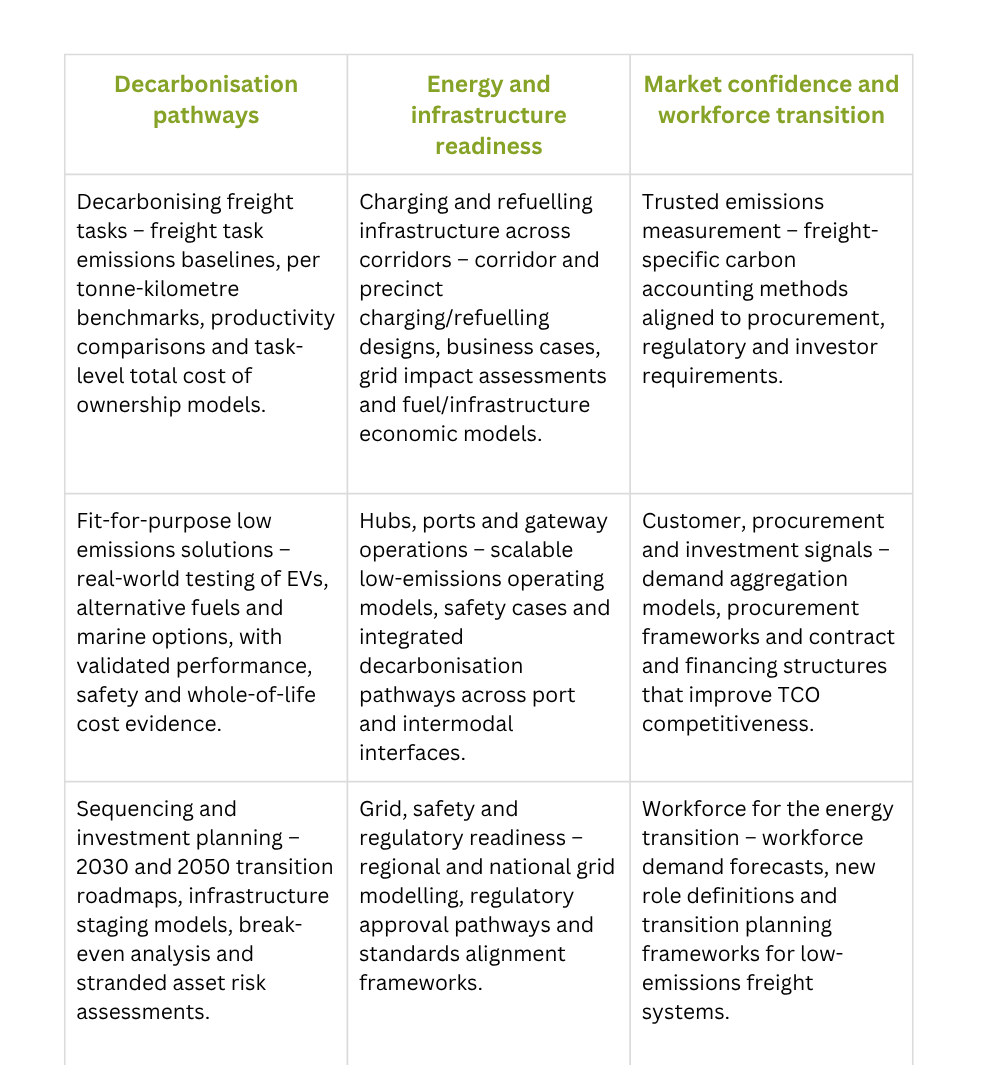
Accelerating practical decarbonisation across Australia’s freight system. This program prioritises emissions reduction to maintain freight productivity, service reliability and cost competitiveness.
Themes and activities:
Outputs
- National freight emissions baselines and per tonne-kilometre benchmarks
- Customer-ready decarbonisation pathways to 2030 and 2050
- Validated performance, safety and total cost of ownership evidence for low-emissions freight
- Corridor and precinct energy infrastructure deployment plans and grid impact assessments
- Clear regulatory, procurement and investment frameworks to enable transition
- Workforce transition and capability planning guidance
Outcomes
- Reduced emissions intensity per tonne-kilometre across Australia’s freight system
- Commercially viable low-emissions freight adopted at scale
- Faster, lower-risk fleet and corridor transition
- Coordinated fuel and infrastructure investment
- Maintained freight productivity, reliability and cost competitiveness
- Increased investor, customer and export market confidence
R&D PROGRAM 3: FREIGHT RESILIENCE
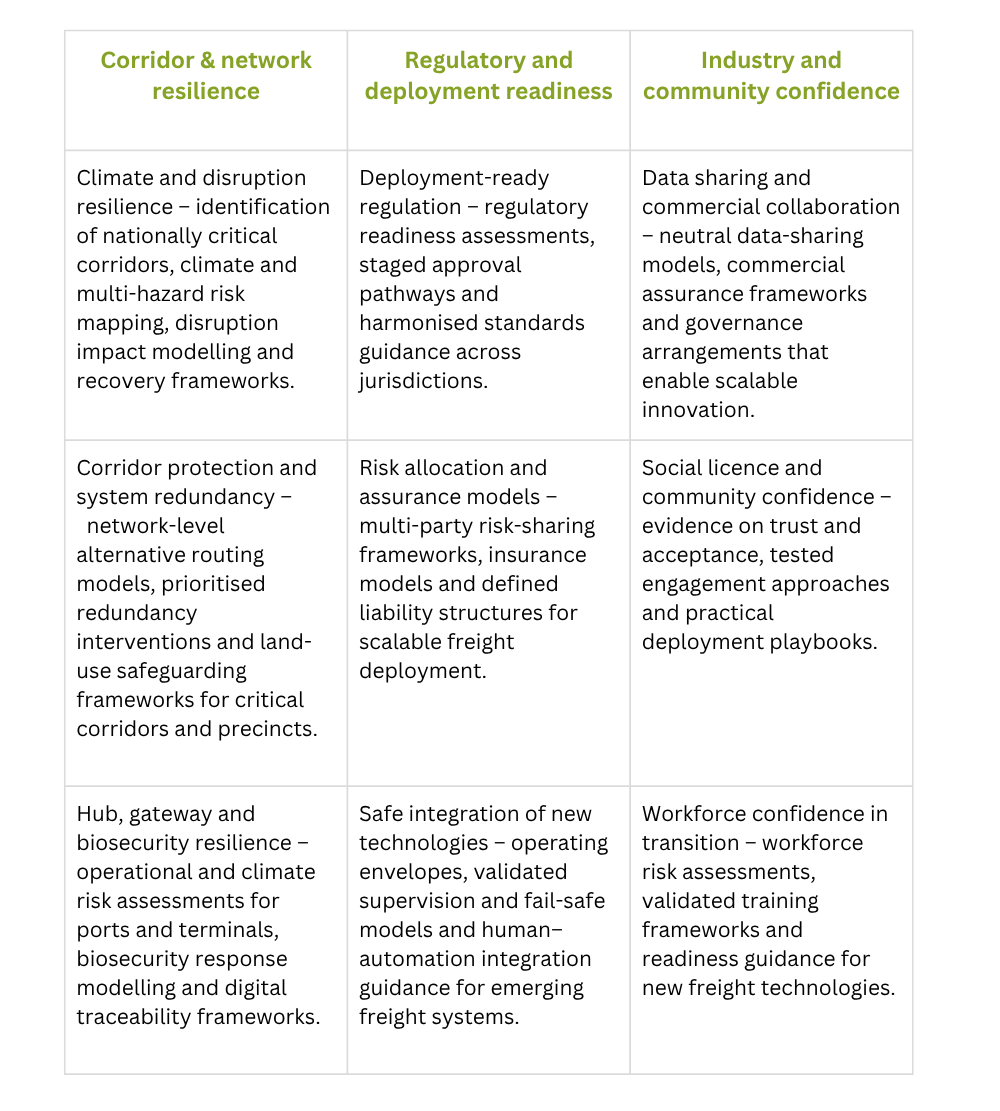
Strengthening safe, reliable and climate-ready freight networks under increasing system risk. This program focuses on practical system resilience: protecting freight corridors, improving redundancy, strengthening climate adaptation and ensuring safe integration of new technologies.
Themes and activities:
Outputs
- National map of critical freight corridors and economic risk exposure
- Climate, disruption and cyber risk assessments with recovery frameworks
- Network resilience and alternative routing models with prioritised interventions
- Freight corridor and precinct safeguarding (land-use protection) frameworks
- Clear, harmonised regulatory and assurance pathways for new freight systems
- Risk allocation, governance and liability models for scalable deployment
- Collaboration, social licence and workforce readiness frameworks
Outcomes
- More resilient freight corridors, hubs and gateways under climate and system stress
- Reduced disruption impacts and faster recovery from major events
- Protected freight corridors from long-term land-use encroachment
- Safer, more certain deployment of new freight technologies
- Stronger industry, workforce and community confidence
- Improved national supply chain reliability and economic security
Supporters
Organisations with a vision to develop resilient and sustainable freight in Australia.


























































More information
To find out more about the Future Freight CRC contact us below.
Contact Us
Lee-ann, Bid Lead
